

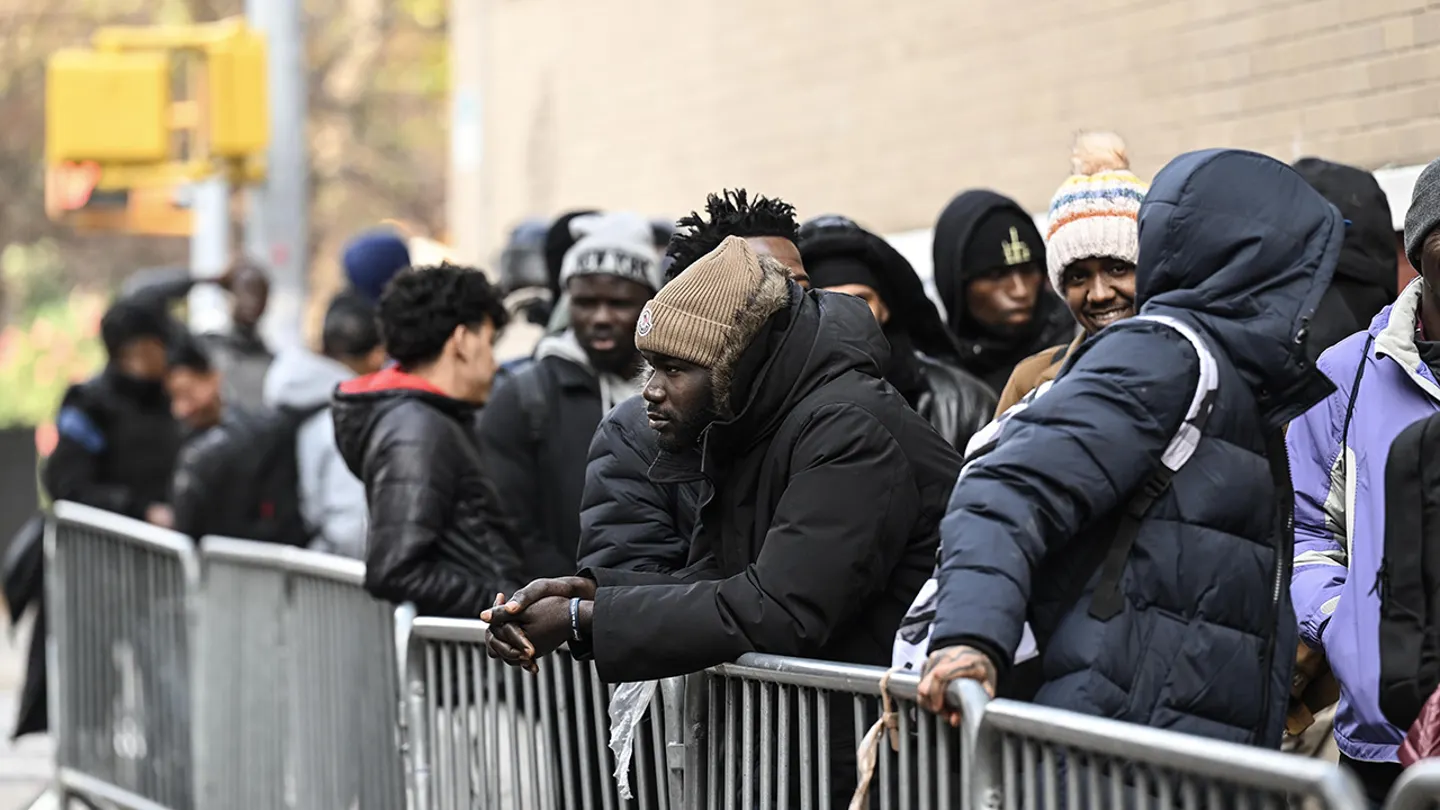
Benjamin, a Nigerian deportee, was flown from the United States to Ghana, shackled, dehumanised, and abandoned without papers. At a military-run camp outside Accra, he endured sweltering heat, swarms of mosquitoes, and unsanitary water for two weeks.
Lacking identity documents leaves people like Benjamin vulnerable to becoming stateless and trapped in a legal no-man’s land without recognition by any country. This erasure of their official existence deepens their hardship, making their path back home or to safety even more uncertain.
In the midst of these personal challenges, Ghanaian authorities drove them to the Aflao border crossing near Lomé, Togo, escorted them “through the back door,” and dropped them off without notifying Togolese officials or providing a way home, according to Guardian Nigeria.
Togo acts solely as a transit point and does not influence policy decisions or diplomatic negotiations related to third-country deportations.
Emmanuel, a Liberian national and former United States green card holder, faced a similar fate despite a court order blocking his removal to Liberia. Their experiences reveal a system exposing diplomatic fragility in West Africa, gaps in regional migration governance, and vulnerabilities for those caught between nations.
United States Legal Framework and Challenges
The United States has long held the authority to deport non-citizens, but in 2025, it increasingly sent African migrants to countries where they have no ties. Reporting from the Washington Post shows flights once used for direct returns now touch down in Ghana and Eswatini.
A similar controversy emerged in Eswatini when the United States attempted a third-country removal there, creating diplomatic tension and exposing the risks of accepting non-nationals without clear bilateral or regional coordination.
The Eswatini case exemplifies how abrupt deportations without prior consultation can provoke diplomatic rifts and expose weaknesses in regional cooperation and legal safeguards. It underscores the urgent need for robust coordination between African states and the U.S. to prevent diplomatic and humanitarian fallout.
Under American law, individuals may be removed to any country that agrees to receive them, a clause now invoked in ways critics say bypass legal safeguards. Several West African migrants with court orders halting their deportation were nonetheless removed. They were restrained in full-body harnesses for long flights and endured harsh detention upon arrival.
A U.S. federal judge described the policy as “an attempt to bypass judicial protections for individuals fleeing persecution,” raising concerns about eroding procedural rights and the principle of non-refoulement, which is the rule that forbids sending individuals to places where they face danger or persecution.
Analysts warn the practice may violate non-refoulement by sending people to states lacking capacity, leaving African governments confused and unprepared.
Allan Ngari, Africa Advocacy Director at Human Rights Watch, calls such deals a potential breach of international law. Oliver Barker-Vormawor, representing deportees in Ghana, notes that individuals are processed “without lawful basis” and often “with no ties whatsoever to the country.
Civil society in Nigeria similarly condemns the strategy as “discriminatory, unjust, and a gross violation of human rights.” This raises sovereignty concerns for African states, because accepting third-country deportees without negotiation limits national control over borders and migration decisions, highlighting the importance of ECOWAS oversight to protect coordinated regional migration governance.
Ghana’s Response and Diplomatic Dynamics.
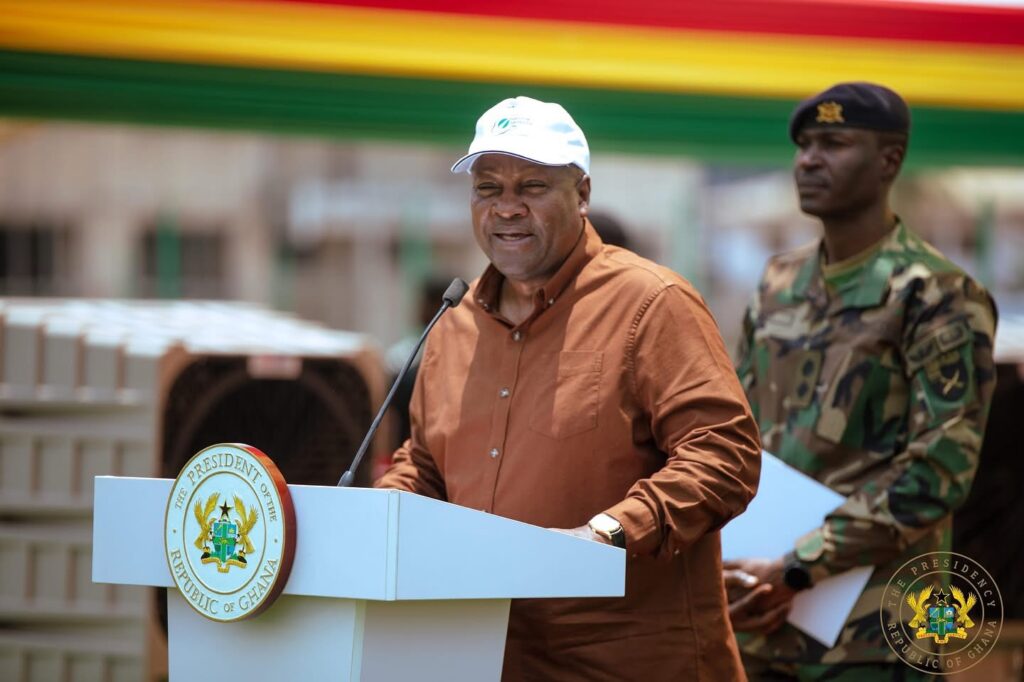
Ghana became the unexpected landing point for West African migrants removed from the United States, even when they were not Ghanaian citizens. President John Mahama told ABC News: “West African migrants can enter Ghana without a visa, and our actions are in line with regional free movement rules.”
Foreign Minister Samuel Okudzeto Ablakwa added in an interview with Africanews: “The government acted in good faith. Our intention was purely humanitarian, to protect vulnerable arrivals. Ghana did not receive any payment from the United States.” These statements highlight Ghana’s intent to comply with regional mobility rules while providing temporary protection to deportees.
Despite this, some deportees remained in detention, raising questions about the policy’s humanitarian framing. Civil society and legal organizations have challenged the arrangement.
Democracy Hub filed a constitutional lawsuit, arguing that the government approved the transfers without necessary checks, while opposition voices warned that the executive may have overstepped its authority, potentially breaching constitutional and regional protocols. Politico and the Foreign Affairs Forum reported extensively on these concerns, emphasizing both legal and diplomatic implications.
Nigeria reacted sharply, with officials quoted by Sahara Reporters stating, “We were not informed that our nationals would be sent to Ghana. The disagreement between Ghana and Nigeria sits at the center of this diplomatic storm, because both countries are major actors in the region and their responses shape wider West African policy. Proper consultation is required. This situation constitutes a breach of diplomatic norms.” The episode illustrates the delicate balance Ghana must maintain between regional solidarity, humanitarian responsibility, and constitutional obligations, while deportees remain caught in the middle of a complex policy challenge.
Operational Process: How Deportees Are Managed.
Deportees were often unaware of their final destination until mid-flight, leaving them disoriented, according to reporting by the Foreign Affairs Forum and The Guardian. Many were restrained in full-body harnesses for long periods, raising serious humane-treatment concerns.
Deportees faced harsh detention outside Accra, enduring sweltering heat, mosquito swarms, inadequate food, water, and medical care. Many, including Benjamin and Emmanuel, were later irregularly transported through Togo without proper border procedures, stripped of identity documents that left them vulnerable to statelessness. Health risks like malaria and dehydration were common hazards in these conditions, exposing systemic neglect and humanitarian gaps.
These irregular transfers increase the risk of statelessness, because individuals without identity papers cannot assert nationality or access protection. Repeated transfers without documentation further sever their legal identity links to any state.
Health risks were significant, including malaria, dehydration, and exposure to unsafe water. Several deportees had previously secured court protections in the United States, yet were still removed, raising serious questions about due process and adherence to the principle of non-refoulement, which forbids sending individuals to places where they may face harm.
Ghanaian officials reported that 14 deportees were repatriated (13 Nigerians and one Gambian), though lawyers indicated some remained in detention beyond the official arrangements, according to the Washington Post. The operational challenges illustrate the difficulty governments face in balancing enforcement, legal compliance, and international scrutiny.
Lawyers in Ghana reported inconsistent notification from U.S. officials before flights departed, confusing arrival numbers, identity verification, and responsibility for deportees.
The inconsistent notification by U.S. officials resulted in confusion and unpreparedness among Ghanaian authorities, complicating identity verification processes and fueling diplomatic frictions with Nigeria. These coordination failures exacerbated humanitarian hardships for the deportees.
The United Nations High Commissioner for Refugees (UNHCR) has also monitored cases involving individuals with protection claims and has urged stronger safeguards to prevent refoulement.
NGOs, UN, and Other Actors
Recent reports show the situation falls within the mandates of the International Organisation for Migration (IOM) and UNHCR, which operate regionally, providing emergency reception, shelters, legal referrals, case management, and counseling, making them key actors in managing third-country deportations.
In 2024, the IOM supported more than 250 third-country deportees in West Africa with reintegration assistance, including transport, accommodation, and basic supplies.
Local NGOs contribute additional support by monitoring detention conditions, documenting humanitarian gaps, and helping deportees access medical care, psychosocial services, and temporary shelter.
Many of these grassroots organizations collaborate closely with the UNHCR and IOM to facilitate safe return and reintegration for individuals who request it, thereby bridging policy frameworks and on-the-ground realities.
Regional Governance and the Role of ECOWAS
The Economic Community of West African States (ECOWAS) was established to promote economic integration, free movement, and regional stability. Its protocols allow citizens of member states to travel, reside, and work across borders without visas, while also requiring coordination of policies that respect sovereignty and protect human rights, as outlined in the ECOWAS Treaty of 1993. For third-country deportations, ECOWAS’s role is critical in ensuring member states are not left to manage external pressures alone.
Ghana justified cooperating with the United States by referring to the ECOWAS free-movement framework. Officials told the Nigerian Inquirer that West African migrants do not require visas to enter Ghana, so the country’s acceptance of deportees did not violate regional mobility rules. Nonetheless, the arrival of Nigerian citizens without prior notification exposed gaps in coordination, fueling tensions between Accra and Abuja.
ECOWAS has previously intervened in migration and cross-border disputes, including conflicts over irregular migration, refugee flows, and repatriation agreements. These interventions have demonstrated ECOWAS’s capacity as a mediator, facilitating agreements and easing tensions among member states. The 2025 Labour Migration Strategy further empowers ECOWAS to coordinate deportation protocols, ensure protection of migrant rights, and promote equitable burden-sharing to uphold regional stability.
Notably, in 2025, Dr. Omar Alieu Touray, President of the ECOWAS Commission, visited the Nigeria-Benin border to assess the implementation of free movement protocols. Engaging directly with border officials and local communities, he stressed that “free movement does not mean no documentation. Proper ID checks and customs processes are essential to balance openness with security.”
Supporting this, Albert Siaw-Boateng, Director of Free Movement of Persons and Migration at ECOWAS, highlighted the bloc’s commitment to coordinated migration governance.
He pointed to the 2025 Labour Migration Strategy as a game-changer that unites member states around shared, rights-based management of labour and forced migration challenges. Through these efforts, ECOWAS positions itself as the crucial mediator, helping navigate complex issues like third-country deportations while protecting both migrants and states.
According to ECOWAS’ own Labour Migration Strategy, approved in May 2025, the bloc reaffirms that migration must be governed by rights-based regional cooperation. The strategy’s architects call for “collective commitment to ensure that labour migration serves as a tool for inclusive growth, sustainable development, and regional prosperity.”
In the current context, this mandate suggests ECOWAS has both the framework and authority to coordinate third-country deportation guidelines, monitor treatment of deportees, and facilitate burden sharing.
ECOWAS is therefore positioned not only as a policy guide but as the key mediator that can prevent unilateral decisions, reduce diplomatic friction, and ensure member states share responsibility fairly.
Past experiences, including the Eswatini case, demonstrate the risks when countries accept deportees without coordination. A point documented by BBC, CNN, and Al Jazeera. This underscores ECOWAS’s importance in providing oversight and mediation to protect states and individuals.
Broader Implications and Future Risks
The controversy over third-country deportations has sparked political tensions across West Africa. Nigeria’s government has publicly criticized Ghana for accepting its nationals without prior consultation, highlighting the diplomatic risks of unilateral arrangements, according to Sahara Reporters. Repeated miscommunications threaten regional trust and coordinated migration management.
Community reactions in receiving countries could escalate. Residents in Ghana and other states might perceive deportees as an added burden on social services, housing, and employment, creating potential pushback at the community level.
Future migration patterns may shift unpredictably if the U.S. continues third-country deportations. Certainly, some African nationals may avoid official migration routes, increasing irregular migration and human trafficking risks.
Analysts suggest this could pressure regional governments to accept more deportees than they can process, thereby stretching their financial and administrative capacities and undermining their governance frameworks.
Human rights concerns remain critical. Deportees often face detention, lack identity documents, and receive limited reintegration support. Professor Kofi Mensah explains that “these practices challenge the principle of non-refoulement and risk normalizing minimal oversight for vulnerable migrants.”
Regional observers emphasize that ECOWAS should establish clear guidelines to prevent ad hoc arrangements. Protocols must protect deportees’ rights, distribute responsibilities fairly among member states, and maintain regional cohesion. These broader risks directly reflect the experiences of Benjamin, Emmanuel, and others, whose human stories highlight the urgent need for safeguards and coordinated support.
Conclusion
Benjamin’s uncertainty, with no documents and nowhere to turn, puts a human face on a policy often treated as abstract. His experience exposes the human cost of third-country deportations: disrupted lives, overstretched communities, and states forced into roles they are unprepared for.
The situation underscores the urgent need for structured regional protocols. Without them, deportations risk becoming recurring crises, straining bilateral relations, overstretching local capacities, and undermining the rights of vulnerable individuals. ECOWAS, African governments, and international actors must coordinate notification systems, protection mechanisms, and reintegration frameworks to prevent repeated humanitarian and diplomatic failures.
“Displacement in this region is not only deepening, but also evolving, protection risks are rising, particularly for women and children … we must reinforce these positive trends,” says Abdouraouf Gnon‑Konde, UNHCR’s Regional Bureau Director for West and Central Africa. This underscores the urgent need for coordinated action and safeguards to prevent more lives from being thrust into uncertainty.
Benjamin’s plight is a stark reminder that migration policy is measured in lives, dignity, and the delicate balance between sovereignty and shared responsibility. As Archbishop Desmond Tutu profoundly said, “My humanity is caught up, is inextricably bound up, in theirs. We belong in a bundle of life. We say, ‘a person is a person through other people.’”
This demands that governments and regional bodies act with resolve and compassion to prevent more lives from being lost in limbo.
 English
  French