

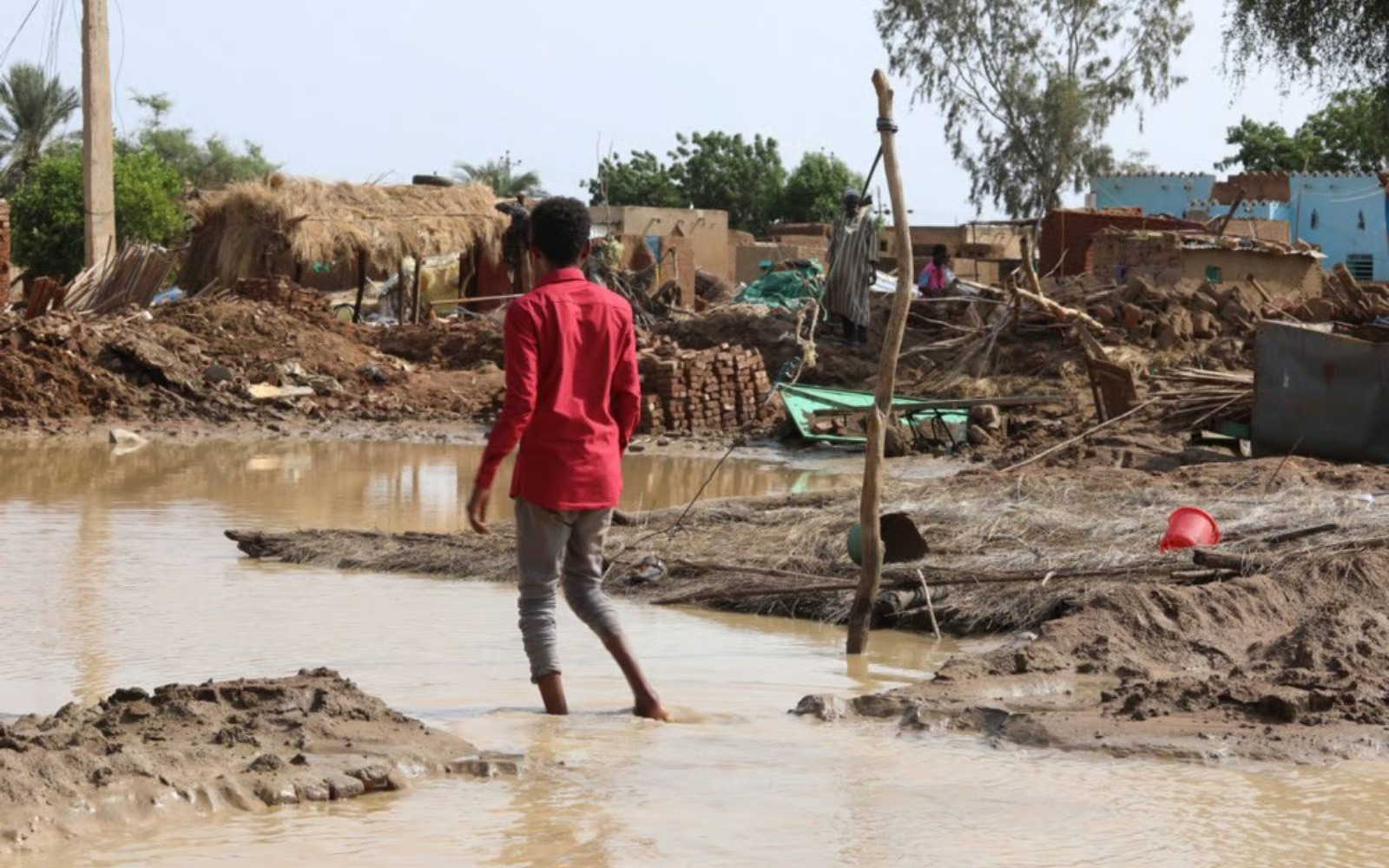
On August 31, a landslide struck Tarasin, a remote village in the Marrah Mountains of Darfur. Local authorities and aid groups reported over 1,000 residents dead, with hundreds buried below ground. Triggered by prolonged torrential rains, this disaster has devastated entire communities and created a humanitarian crisis in the already conflict-ridden region of Sudan.
According to Reuters, the landslide followed 36 hours of heavy rainfall, which caused the steep, deforested area to collapse on Tarasin and nearby settlements. Homes, animals, and farmland were swept away as powerful mudslides tore through the area.
As of September 4, Save The Children reported that 373 bodies had been recovered, and as many as 1,000 lives may have been lost, including an estimated 200 children. In the Tarasin area, which comprises five villages, there was only one survivor in the most affected village. Across all five villages, there were only 150 survivors, including 40 children. The Civil Authority also reported around 5,000 dead livestock.
In nearby villages, survivors reported entire families buried alive. In Tarasin specifically, only one person is believed to have survived the initial mudslide, according to the Sudan Liberation Movement/Army (SLM/A) and other emergency teams on the ground.
Save the Children said the 40 children among the 150 survivors were being treated by their mobile health unit. Many suffered from dehydration, injuries, and shock. In several cases, children had lost both parents. The emergency team provided basic medical care, food, and psychological first aid, while also distributing non-food items such as tents and hygiene kits to families displaced by the landslide.
“Thousands are without shelter, food, or access to clean water,” the organisation said. UN spokesperson Stephane Dujarric added that an estimated 150 people from Tarasin and neighbouring villages had been displaced.
Despite logistical hurdles, humanitarian organisations were working to scale up operations. According to the United Nations Office for the Coordination of Humanitarian Affairs (OCHA), priorities included the delivery of emergency medical supplies, food assistance, shelter materials, and hygiene kits.
Flash appeals have been circulated to partner agencies and donor countries to support the ongoing response. Teams also conducted needs assessments to better understand the long-term impact on health, nutrition, and livelihoods in the region.
Save The Children emphasised the need for continued access and protection of humanitarian staff to ensure aid can be delivered safely.
As of mid-September, recovery and relief operations were ongoing. The exact number of dead and missing remains uncertain due to limited access and continued instability in the region. Emergency teams continue to search for bodies, treat survivors, and support displaced families. According to Save The Children, efforts were underway to establish temporary shelters and provide psychosocial support to traumatised children and families. The United Nations and other humanitarian agencies were also closely monitoring the situation and reiterated their commitment to supporting affected communities.
Conflict-related Challenges
The disaster unfolded in a remote area with no official state presence, according to the SLM/A. That absence complicated rescue efforts and delayed the delivery of aid. The region, located in southern Darfur, is controlled by armed opposition groups and remains largely cut off due to conflict and infrastructure collapse.
According to OCHA, the disaster zone’s remoteness, rough terrain, and ongoing insecurity impeded the humanitarian response. OCHA described the situation as “extremely challenging,” with several aid convoys unable to reach the area due to security concerns and washed-out roads.
Access remains a major challenge. Roads are severely damaged, and humanitarian teams face threats due to the presence of armed groups and ongoing conflict between the Sudanese Armed Forces (SAF) and the Rapid Support Forces (RSF) in other parts of Darfur.
Sudan has been gripped by internal fighting since April 2023, when tensions between military factions escalated into full-scale conflict. The violence has displaced millions and weakened the country’s ability to respond to natural disasters. Humanitarian operations are currently limited to a few non-governmental organisations and community-based efforts working under precarious conditions.
The disaster has underscored Sudan’s fragile emergency response capacity. Years of conflict, economic crisis, and political instability have left government institutions unable to provide consistent services, particularly in rebel-held or rural areas.
According to the Associated Press, Sudan’s civil institutions have largely collapsed since the outbreak of war between the SAF and RSF in 2023. Health systems, transportation networks, and communications infrastructure are either non-functional or under the control of warring factions.
This context has left international agencies and NGOs as the primary responders in many parts of the country, a dynamic tested again in the aftermath of the Darfur landslide.
Climate Risk
The event has highlighted the environmental vulnerability of Darfur’s mountainous regions.
The combination of heavy rains, land degradation, and deforestation in the Jebel Marrah area has increased the risk of such disasters. Meteorological data cited by multiple agencies confirms that unusually intense rainfall over a short period contributed to soil saturation and slope instability, ultimately triggering the slide.
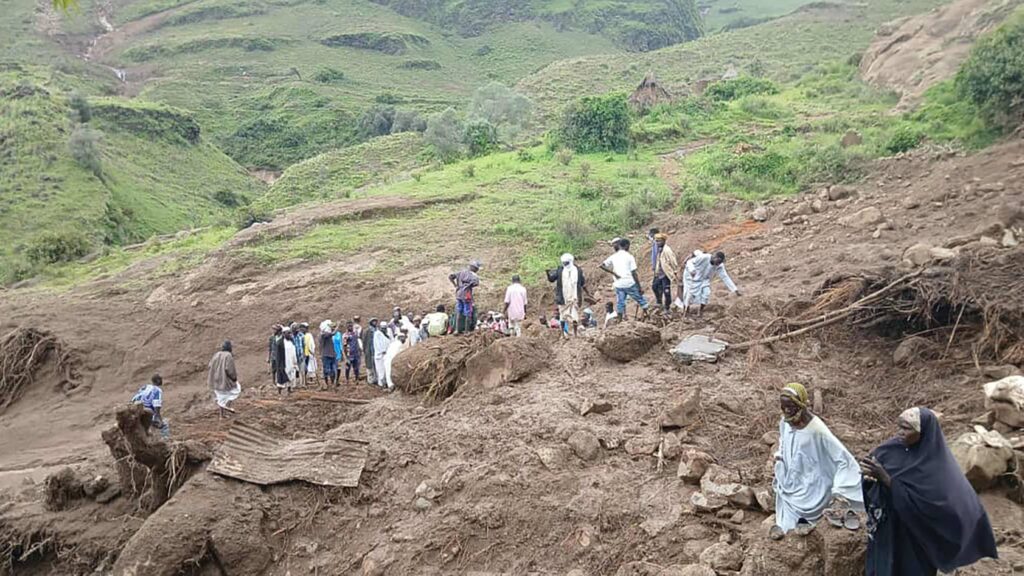
The Marrah Mountains, known for their rugged terrain and seasonal rainfall, are home to thousands of civilians, many living in makeshift housing along slopes. These informal settlements often lack proper drainage or structural reinforcement, increasing exposure to landslides and floods.
Rising global temperatures are intensifying weather patterns, leading to more frequent and intense rainfall events. In regions stripped of vegetation due to deforestation, the land loses its ability to absorb water, accelerating soil erosion and slope instability.
Meanwhile, ongoing conflict in Sudan hampers environmental management, as armed violence displaces communities, weakens local governance, and delays or halts infrastructure and reforestation efforts. As a result, natural hazards and landslides turn deadly with minimal governance and emergency response mechanisms in place. This combination of environmental stress, poor governance, and insecurity leaves already vulnerable populations exposed to even more risk.
To address the root causes of such disasters, long-term solutions must include large-scale reforestation programs in the Jebel Marrah region to restore vegetation cover and stabilise soil. Additionally, investment in climate-resilient infrastructure and community-based early warning systems can reduce vulnerability and enhance preparedness in high-risk areas.
Local Voices
Al Jazeera’s Mohamed Vall reported that the situation is dire. The affected areas cannot be reached by car or other means of land transport. “I’ve been there and I have seen the destitution, the seclusion, and the dire poverty of people living hand to mouth, even though the land is fertile, with citrus plants and abundant water, they have no connection to civilisation, which makes farming very difficult,” Vall said.
Vall added, “Other means of survival are basically impossible. They have no schools and no traces of government in the area.”
“Not a single aid worker or medical professional was present in the village at the time,” Save the Children said.
The organisation’s emergency health team, dispatched days after the landslide, had to travel more than 48 hours, including by donkey over impassable roads, to reach the affected area. Once on site, the team found survivors using their bare hands to dig through the rubble.
A video shared by a Facebook user and Tarasin resident Mohammed Yousif Zakria Hamdy emerged after the disaster. Speaking in Fur, he reported that only one deceased person had been recovered. “In 30 years, we have never seen rains like this. They found one dead body; the rest are still buried under that mud,” Mohammed said.
International Response
The SLM/A, which controls the region, was the first to report the incident. It described Tarasin as “destroyed.”
The SLM/A has publicly appealed to the United Nations for immediate humanitarian intervention, calling on the international community to “take responsibility” for providing emergency assistance to a region abandoned by Sudan’s central government.
In response, the UN Resident and Humanitarian Coordinator in Sudan, Luca Renda, expressed condolences and confirmed that UN agencies are coordinating with humanitarian partners to provide support. “The loss of life is tragic and the needs are urgent,” Renda said in a statement released by OCHA.
The Sudanese Sovereign Council, Sudan’s de facto governing body, issued a national day of mourning and stated that emergency aid was being organised. However, it remains unclear how much assistance has reached rebel-held areas like Tarasin.
Despite logistical hurdles, humanitarian organisations are working to scale up operations. According to OCHA, priorities include delivery of emergency medical supplies, food assistance, shelter materials, and hygiene kits.
Flash appeals have been circulated to partner agencies and donor countries to support the ongoing response. Teams are also conducting needs assessments to better understand the long-term impact on health, nutrition, and livelihoods in the region.
Save The Children emphasised the need for continued access and protection of humanitarian staff to ensure aid can be delivered safely.
 English
  French