


When Arsenal took the field on August 17 at Old Trafford, Britain’s second-largest football stadium, Arsenal’s jersey bore the tagline “Visit Rwanda” during the 2025–26 opener.
As part of the deal, Arsenal’s men’s and women’s players are expected to travel to Rwanda, with coaching clinics planned to nurture local football talent among boys and girls. The initiative is presented as a cultural and skills exchange aimed at strengthening grassroots football in the country.
“We’re thrilled to be showcasing the vibrancy and beauty of our country. Rwanda is a country pulsing with energy, creativity, and innovation.” says Clare Akamanzi, CEO of the Rwanda Development Board.
The same branding, estimated to have cost Rwanda at least $30 million, also appears on the shirts of Spain’s Atlético Madrid and France’s Paris Saint-Germain. It’s all part of a push by Rwanda’s government to reintroduce a nation once synonymous with genocide as a hub for tourism, and foreign investment.
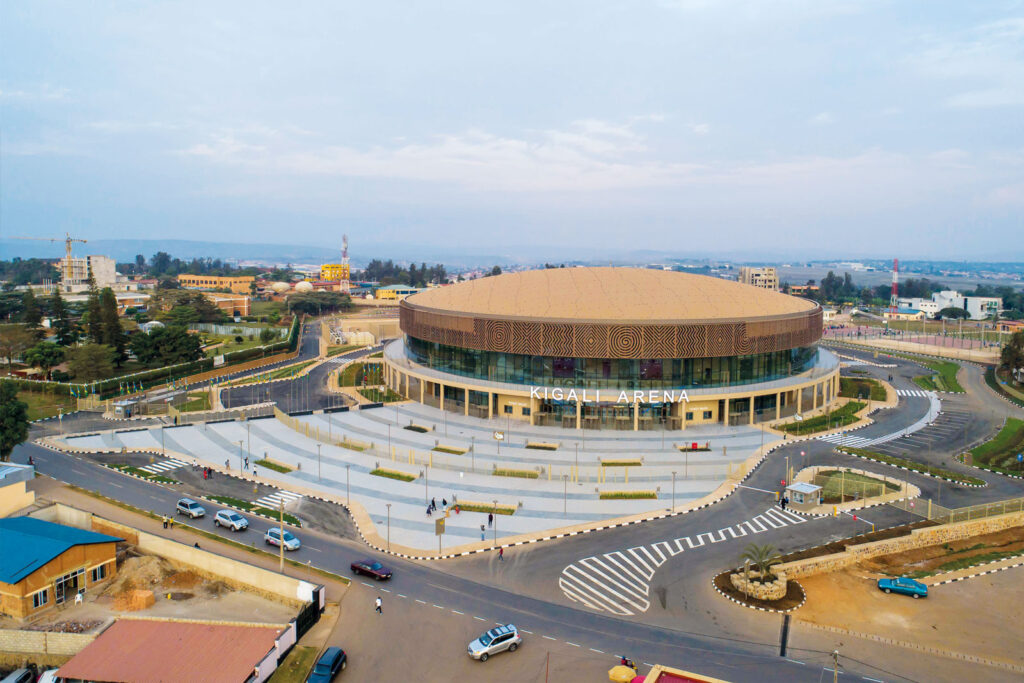
Launched in 2018, “Visit Rwanda” is only one thread in a rebranding effort. New terminals, renewable energy targets, partnership with the NBA, praised e‑government systems show a country that is growing and wants to be seen. Yet, many see a troubling image behind the progress advertised, that Rwanda is marked by tight political control, constrained civic space with no room for dissent.
Under President Paul Kagame, Rwanda’s regeneration has turned into a case study, triumphs in post‑genocide recovery, yes, but at what cost? As African governments eye the so‑called “Rwanda model,” the question is no longer whether it delivers, but whom, and what it silences.
Rising from the Ashes
The roots of Rwanda’s 1994 genocide could be traced to post-independence divisions between Tutsi’s and Hutu’s which emerge at the twilight of colonial rule, in which Belgian administrators institutionalized ethnic identities. This decades of political resentment, spiraled into civil war and, eventually, genocide following the assassination of then-President Juvénal Habyarimana on April 6, 1994.
What followed was one of the most horrifying tragedies in modern history. In just 100 days, nearly 800,000 people, mostly Tutsis and moderate Hutus, were slaughtered in a campaign of ethnic violence.
By July 1994, the Rwandan Patriotic Front (RPF), a rebel group made up largely of exiled Tutsis, had taken Kigali and ended the killings. At the helm was Paul Kagame, a battle-hardened commander who had spent much of his life in exile in Uganda. Though he initially served as vice president and minister of defense under a transitional government, Kagame was widely seen as the real power. He officially assumed the presidency in 2000.
After the genocide, Rwanda was a nation in ruins. The World Bank noted that the GDP had plunged by over 50% in 1994, infrastructure was decimated, and more than 2 million people were either displaced internally or living as refugees. The health sector collapsed as three-quarters of medical staff fled or were killed, vaccination rates collapsed, and only one doctor per 100 person remained in service. This near-total breakdown of health infrastructure worsened an already dire public health crisis.
Faced with such devastation, Kagame’s administration embarked on an ambitious rebuilding project, anchored on security, national unity, and economic modernization. His government launched Vision 2020, a national development plan aimed at transforming Rwanda into a middle-income country. The plan focused on strengthening institutions, expanding education and healthcare, fostering private investment, and leveraging technology.
One hallmark of the post-genocide justice process was Gacaca, a traditional community-based court system used to adjudicate over 1.2 million genocide-related cases, offering both a form of transitional justice and societal reconciliation.
The turnaround has been remarkable. Life expectancy rose from 47 years in 2000 to over 68 years by 2019, according to UNDP data. Primary school enrolment reached over 98% and the country now boasts one of the highest proportions of women in parliament globally. By 2024, the poverty rate had fallen to 27.4% from 60 to 65% in 2000.
Even the “Visit Rwanda” campaign seems to be working because in 2024, the country’s travel and tourism sector reached a record high, contributing over 1.9 trillion Rwandan francs (around $1.9 billion) to the national economy, nearly 10% of Rwanda’s GDP, and supporting approximately 386,000 jobs, according to the World Travel and Tourism Council.
Rwanda’s global outreach extends into education and technology. Carnegie Mellon University opened a campus in Kigali in 2011, training the next generation of African tech leaders, while companies like Zipline and Volkswagen have used Rwanda as a launchpad for African innovation.
This global facing posture also extends to diplomacy and soft power. Kigali has styled itself as Africa’s conference capital, hosting high profile gatherings like the World Economic Forum on Africa, the Commonwealth Heads of Government Meeting (CHOGM), the African Union Summit, the Giants of Africa Basketball Festival, and the YouthConnekt Africa Summit. These events place Rwanda on the world map and signal its ambition to shape global conversations.
“Rwanda’s post-conflict governance model was extremely deliberate,” said Dr. Phillip Olayoku, a conflict resolution specialist and political analyst. “There was a clear recognition that restoring order would require a powerful center. In that context, Kagame’s consolidation of power was seen as necessary.”
Rwanda’s post-conflict rebuilding also drew on traditional practices to promote unity. One of the most visible is Umuganda, a nationwide community service day held on the last Saturday of each month. On this day, citizens come together to clean streets, repair roads, plant trees, and take on other public works. Umuganda has come to represent a renewed social contract, one that reminds everyone of their collective responsibility in a country where formal civic structures were once fractured
A Fragile Peace?
Still, not everyone sees Rwanda’s success story in the same light. Critics argue that the country’s global image of peace and prosperity is not the complete story.
“Rwanda and Kagame have become one and the same,” said Susan Thomson, a professor of peace and conflict studies at Colgate University and a longtime observer of Rwandan politics. According to her, Kagame’s grip on power has come at the cost of open political space, with little room for dissent or opposition.
Thomson argued that Kagame’s trade-off of civil liberties for “peace” primarily benefits the elite in Kigali, saying, “The problem is that Rwanda has denied rights and has not delivered on jobs or poverty reduction outside the capital. The system works to serve those in power in Kigali.”
One example for Thomson’s argument about Rwanda’s stifled political space is the case of Ms. Victoire Ingabire, a prominent opposition figure in the country. She returned from exile in 2010 to challenge Kagame’s rule, and then arrested and sentenced to eight years in prison. Also, independent media outlets have either shut down, fled the country, or chosen to self-censor. A 2022 report accused the Rwandan government of using surveillance, harassment, and arbitrary detention to silence critics.
Thomson herself experienced the regime’s scrutiny firsthand. During her research trip in 2006, Rwandan officials detained her, confiscated her passport, and subjected her to “re-education” sessions after discovering she had interviewed a former Hutu prisoner. A year later, she was declared persona non grata.
“Judicial authorities in Rwanda, lacking the independence to stand up and protect free speech in accordance with international law, have unjustly convicted and jailed people based on their protected speech and opinions,” said Lewis Mudge, Central Africa director at Human Rights Watch in a press statement.
There are also concerns about Kagame’s extended stay in power. After amending the constitution in 2015, Kageme won reelection in 2017 with 98.8% of the vote, extending his potential rule until 2034.
“Rwanda offers a troubling example where the appearance of progress and democratic governance masks a deeply repressive regime,” wrote Denise Zaneza, a commentator on Rwandan civic space. Still, others argue that criticism from outside often overlooks Rwanda’s unique post-genocide context.
“It’s difficult to understand Rwanda unless you understand what genocide does to a society,” noted Olayoku. “It would have been naïve to expect a soft, modern democratic transition, especially given the scale of the atrocities. When half the community are seen as perpetrators and the other half as victims, how do you create peace with just dialogue? Something has to prevent relapse.”
Selling the Rwanda Model.
In development circles, the phrase “the Rwanda model” has come to symbolize an African success story, a nation that emerged from genocide to become a symbol of order, and fast-paced reform. Clean streets, digitized public services, low corruption, and steady economic growth are often held up as proof that with the right leadership, even the most broken societies can rise.
Rwanda continues to project confidence and brand itself as a development success story. Through Vision 2050, its long-term blueprint to become an upper-middle-income country by 2035 and a high-income, knowledge-based economy by 2050, it is investing heavily in AI and pan-African entrepreneurship.
Other African countries are watching closely. Recently, the Democratic Republic of Congo announced a heavily criticized deal with FC Barcelona to launch a “Visit Congo” campaign, mirroring Rwanda’s branding playbook.
As Rwanda becomes a continental benchmark, even among admirers, the question lingers: What happens when Kagame exits the stage? Will the centralized system that has driven Rwanda’s rise be flexible enough to sustain it without him? And what becomes of a nation built on unity if dissent is still treated as a threat?
 English
  French