

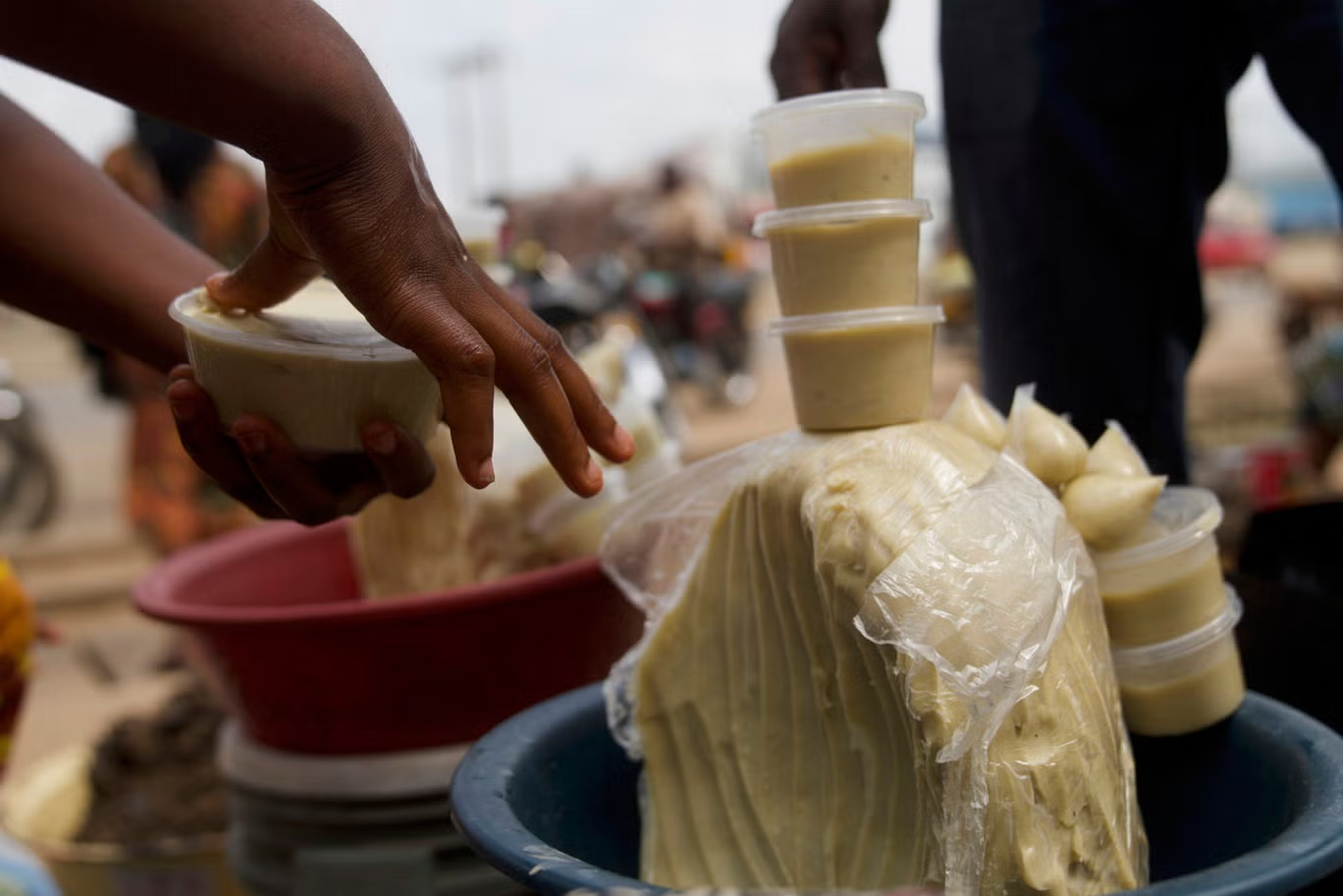
Nigeria’s ban on raw shea nut exports is a bold move aimed at industrialising its vast local production. The policy coincides with the inauguration of a new shea processing plant in Niger State, reflecting a coordinated push to strengthen domestic processing capacity. Abuja presents the policy as an ambitious industrial leap, but in Niger, Kebbi, Kwara, Kogi, and other shea-producing states, women who wake at dawn to crack open shea nuts fear it will strip them of their only source of survival. This fear is palpable.
The government defines the ban as a catalyst to boost local shea butter processing, creating more jobs and enhancing rural incomes. Yet, the abrupt policy raises questions: Is it a visionary step toward capturing more value within Nigeria, or a protectionist gamble that could disrupt fragile trade networks, alienate international buyers, and deepen rural hardships? Who will control the new value chain? Will smallholder women collectors benefit, or will the rewards flow mainly to elites and investors?
This article examines the political, economic, and social stakes of the ban, weighing the promise of industrial transformation against the risks of protectionism.
Nigeria’s Shea Sector and the Export Ban: Ambition Meets Uncertainty
Without mincing words, Nigeria stands as a heavyweight in raw shea nut production, producing approximately 40% of the world’s annual crop. Yet, less than 10% is processed locally, and most are exported, often through informal channels. Collectors and women cooperatives argue that Nigeria forfeits huge value by shipping raw nuts instead of finished shea butter.
In August 2025, Vice President Kashim Shettima announced a six-month ban on raw shea nut exports to secure domestic supplies, boost jobs, and support rural women collectors. The policy affects hundreds of thousands of women across northern and some western states, with potential gains estimated at USD 300 million annually. Officials say it will curb smuggling and protect local factories.
Collectors worry that without phased support for credit, storage, or transportation, farm-gate prices could fall and buyers may shift to Ghana or Burkina Faso. Trade analysts, according to Ecofin Agency, warn that a rushed rollout risks deepening rural hardship and undermining intended benefits.
The policy highlights a tension: Nigeria’s industrial ambitions versus the practical realities of reshaping a fragile value chain. Shea export restrictions have sometimes raised domestic production but also caused short-term shocks and favored politically connected actors unless paired with phased measures, credit, storage, and transparency.
Why Now?
The raw shea nut export ban is closely tied to Nigeria’s push to industrialise its agricultural sector. It coincides with the launch of a state-of-the-art shea processing plant in Niger State, a strategic effort to transform the country from a raw material supplier into a value-added exporter in the global shea market.
The timing also reflects a broader federal industrialisation agenda aimed at strengthening domestic supply chains, attracting investment, and ensuring Nigeria captures a larger share of the $6.5 billion global shea industry. By acting at this moment, the government is leveraging momentum in public-private partnerships, infrastructure expansion, and cooperative development, creating an opportunity for rapid transformation before regional competitors like Ghana and Burkina Faso consolidate their advantage.
Ultimately, the ban’s timing is a deliberate strategy: it aligns policy with industrial capacity, investment readiness, and market opportunity. If executed with careful planning and support for local collectors and processors, it could shift Nigeria’s shea sector from exporting raw nuts to controlling a significant portion of refined products in the global market, ensuring that the value long lost overseas is retained domestically.
Ownership Transparency: Who Truly Controls the Factory?
Salid Agriculture Nigeria Limited, which owns the Niger State shea processing plant, is backed by the Niger State Government and financed by the Nigerian Export-Import Bank (NEXIM). While the government provided land, infrastructure, and tax incentives, the precise shareholding structure remains unclear, raising questions about who truly controls operational and financial decisions at the plant.
There have been attempts by local development agencies to strengthen women’s cooperatives and integrate them more equitably into the value chain. However, these cooperatives hold no formal ownership or equity in the refinery, limiting their influence over pricing, supply agreements, or factory operations. As a result, decision-making power and the potential to control the profitability along the value-chain largely rest with Salid Agriculture and it investors. Clarifying refinery control and women’s participation is essential for fairness. This ensures Nigeria’s industrialisation goals benefit local communities, especially women.
Women Collectors and Exporters: The Fragile Heart of Nigeria’s Shea Sector
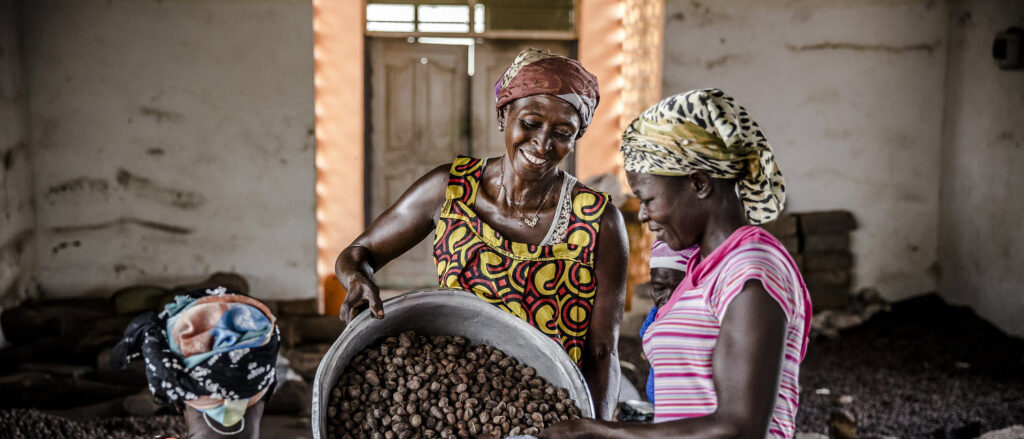
At the heart of Nigeria’s shea industry are rural women collectors whose livelihoods depend on the seasonal gathering and sale of raw shea nuts. From dawn to dusk, they crack, sort, and bag these nuts, often walking long distances to reach buyers. The government’s sudden ban on exports threatens their daily survival.
“We rely on selling raw nuts to support our families. Any delay causes hardship,” said a cooperative leader in Niger State, according to Daily Trust. Adija Rahman, a collector, told France 24, “I can no longer make ends meet. This is the money I use to meet my children’s needs, but now I am in debt.”
“Prices have fallen and buyers are now scarce,” added Amina Suleiman, according to Daily Trust. Risikat Ismail, a trader who had stockpiled nuts, told France 24, “The government should have given two months to sell our stock before enforcing the ban.”
Some in the industry see a path forward. Local processor Yusuf Nafiu Olaseyinde, according to France 24, believes that, if carefully managed, the ban could spark local investment, create jobs, and raise incomes along the value chain.
One can safely conclude that exporters could also face market disruptions.
Dr. Muda Yusuf, head of the Centre for the Promotion of Private Enterprise (CPPE), told Premium Times that without a phased, consultative rollout, thousands of rural collectors and small traders risk collapse.
This fragile core of Nigeria’s shea sector highlights a tough balancing act: industrial policies that aim to add value must not abandon the women and traders who make the industry work.
Nigeria’s Shea Sector: Regional Rivalry and Rising Risks
Although Nigeria produces the bulk of the world’s shea nuts, most still leave the country unprocessed. In 2023 alone, over 17,000 metric tons of shea products were exported, worth roughly ₦20 billion ($14.5 million), reflecting strong global demand for natural ingredients. Yet domestic processing remains limited to around 20,000 metric tons annually, mainly for skincare, food, and pharmaceutical use.
Nigeria’s regional competitors are advancing rapidly. Ghana and Burkina Faso have built strong processing sectors, integrating thousands of women collectors into cooperatives supported by multinationals like L’Oréal and Beiersdorf. Ghana’s processed shea exports have risen over 25% in recent years, while Burkina Faso leverages cooperatives to maintain quality and market stability.
Benin, the world’s fourth-largest producer, is improving storage, training, and production through USAID and Global Shea Alliance initiatives. Compared to Nigeria, where less than 10% of raw nuts are processed domestically, these neighbors capture more value and attract multinational buyers.
Although no formal dispute has arisen, Nigeria’s export ban also clashes with its AfCFTA commitments, which discourage export restrictions. Member nations are expected to reduce export barriers under the AfCFTA to promote free trade throughout the continent. These commitments could conflict with Nigeria’s six-month ban on raw shea nuts, which may sour relations with neighbours and deter foreign investment.
Global Buyer Reactions and Regional Competition
President Tinubu’s six-month ban on raw shea nut exports is meant to transform Nigeria from a raw material supplier into a global player in refined shea products. But on the ground, the move has left many in the industry uncomfortable. Small traders and factory workers alike feel the uncertainty, while global buyers who rely on Nigeria’s shea nuts are already weighing alternatives.
For decades, Nigeria has supplied the bulk of West Africa’s raw shea. Now, supply gaps, rising informal export costs, and processors running well below capacity have exposed cracks in the system. Buyers who once relied on Nigerian nuts are cautious; some are quietly exploring more stable sources in neighboring countries, where structured cooperatives and consistent production make sourcing less risky.
Trade data according to Ecofin, show that Ghana’s shea-butter export value rose by about 31 % between 2018 and 2023, reaching roughly $118 million, while Burkina Faso continues to attract multinational buyers with stable farmgate prices and donor-backed cooperatives.
Brands such as L’Oréal and Beiersdorf have invested in training and traceability programmes that link women collectors directly to export markets, strengthening these countries’ processing advantage.
Funmi Adeoti, West Africa trade analyst, told Ecofin that “Consistency and reliability matter more than volume, and right now, Ghana and Burkina Faso are offering both.”
Industry observers warn that if Nigeria does not quickly invest in processing plants, support women collectors, and clarify export rules, the industrial ambitions behind the ban could falter. Without these measures, rural women, small traders, and even investors risk being left in the lurch, highlighting that policy boldness must be matched with careful planning.
Industry Challenges and Policy Impact
Since Nigeria’s six-month export ban, shea nut prices have plunged by over 30%, leaving thousands of rural women collectors struggling with collapsing incomes. This stark shock contrasts with government ambitions to generate $300m annually from expanded processing and rural job creation.
Nigeria’s factories have an installed capacity of about 160,000 metric tons a year, yet most run at only 35–50% due to raw nut shortages, weak cooperatives, and poor infrastructure. Many women collectors remain disconnected from distant processing hubs, deepening economic distress. They usually sell to local traders, who bulk-buy for exporters or processors, an informal layer prone to price distortions and low transparency.
The ban’s abrupt enforcement, according to Ecofin, without sell-off windows, credit support, or improved storage has left exporters facing cancelled contracts and heavy financial risks. Civil society groups warn that without a phased, consultative transition, rural livelihoods could collapse, investor confidence erode, and the policy’s transformational promise unravel.
Nigeria’s industrial push in the $6.5bn global shea market highlights a stark trade-off: capturing value locally while safeguarding vulnerable communities. Success hinges on scaling infrastructure, strengthening cooperative governance, and creating clear, transparent export frameworks.
Future Outlook.
Nigeria’s raw shea ban is a high-stakes gamble: is it a bold step toward industrialisation, or a protectionist misstep? The goal, capturing more value through domestic processing and rural jobs is valid, but abrupt enforcement threatens to alienate women smallholders, fracture supply chains, and undermine investor trust.
Despite producing nearly 40% of global shea nuts, Nigeria captures less than 1% of the $6.5bn market. Harnessing its processing capacity could yield $300m annually if paired with inclusive growth. Regional peers stress value chain deepening as the path to resilience, reinforcing the rationale.
Price crashes and livelihood shocks expose the human cost. Multinationals wary of supply volatility may pivot permanently to Ghana, Burkina Faso, or Benin. For the ban to deliver, Nigeria must adopt a phased, consultative rollout supported by investment in cooperative governance, rural credit, and infrastructure. Trade experts cited by Ecofin, emphasise that aligning reforms with AfCFTA rules will protect trade relations and sustain investor confidence.
Nigeria stands at a crossroads. Will it leverage this moment to build an inclusive shea industry or lose its place to neighbours ready to seize the opportunity? Boldness in policy is welcome, but prudence in execution is what sustains the vision.
 French
  English